cd
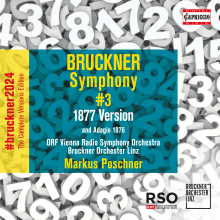
#bruckner24 Symphony #3 (1877) + Adagio (1876)
ORF VIENNA RADIO SYMPHONY ORCHESTRA BRUCKNER ORCHESTER LINZ · MARKUS POSCHNER
Anton Bruckner began the revision of his Third Symphony after completing the Fifth on 16 May 1876 and continued working on it sporadically until 28 April 1877. Then, after the Vienna Philharmonic rejected the Symphony for a third time, Bruckner’s friend, Hofkapellmeister Johann Herbeck, took matters into his own hands. He arranged to conduct the work himself on the concert series of the Society for the Friends of Music [Gesellschaftskonzerte] on 16 December 1877. After Herbeck passed away unexpectedly, Bruckner was forced to conduct the symphony himself. The performance proved to be one of the worst debacles of his career. The players were rude and unreceptive, and the audience left the concert hall in droves. Despite the public fiasco, Theodor Rättig, one of the few people who stayed, offered to publish the symphony. Two other people who were there at the end, Gustav Mahler and Rudolf Krzyzanowski, prepared a piano four-hand reduction for Rättig’s publication which appeared at the end of 1879. It was the first publication of a Bruckner Symphony.
Youtube
Weitere Bilder

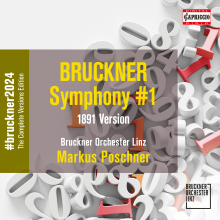
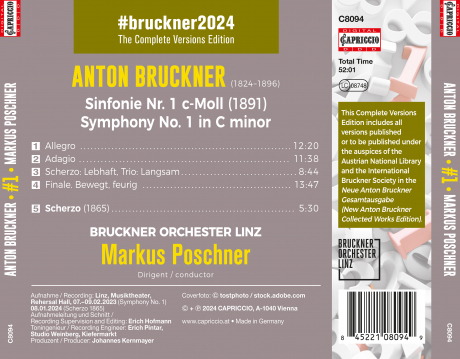
#bruckner24 Symphony #1 (1891)
BRUCKNER ORCHESTER LINZ · MARKUS POSCHNER
Anton Bruckner finally received the award of an honorary doctorate of the University of Vienna on 11 December 1891. For Bruckner, receiving the doctorate fulfilled a long-time wish. He had spent most of his life pursuing academic credentials and applied for honorary doctorates at Cambridge University in 1882 and at the Universities of Pennsylvania and Cincinnati in 1885. Two days later, Hans Richter conducted the Vienna Philharmonic in the first performance of the second or so-called “Vienna” version of the composer’s First Symphony which he had dedicated to the university in gratitude for the degree. The changes Bruckner made in the revised version of the First Symphony are not as extensive as those he made to the Third, Fourth and Eighth Symphonies during the late 1880s and early 1890s. His revisions to the First Symphony did not affect the overall form of any of the movements. He changed many details of orchestration, articulation, and phrase length, some of which are difficult to notice on first hearing. The 1891 autograph score is, nevertheless, the composer’s final word on how he wanted his First Symphony to be performed and understood.
Hörprobe
Weitere Bilder
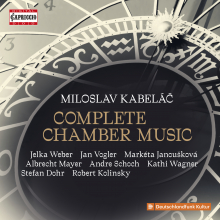
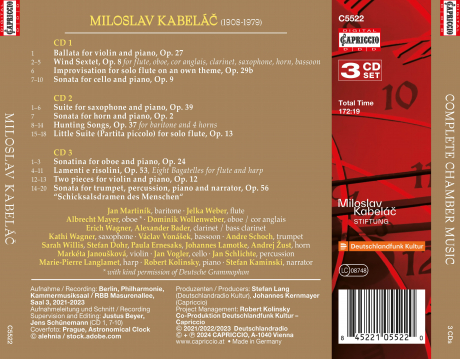
MILOSLAV KABELÁČ - COMPLETE CHAMBER MUSIC
Jan Vogler · Sarah Willis · Albrecht Mayer Markéta Janoušková Andre Schoch · Robert Kolinsky (a.o.)
Miloslav Kabeláč (1908–1979) is a Surprised-by-Beauty composer of the first water whose eight symphonies and grand orchestral Passacaglia Mystery of Time absolutely merit being brought nearer to the repertoire after having spent decades out in the cold. Anyone who has explored these will unlikely be able to resist this offering of his collected chamber music that ranges through all five decades of his composing career, from conventional to experimental forms, from the early Horn- or Cello Sonatas via his Suite for Saxophone to his dramatic chamber cantata Osudová dramata člověka. It's hardly surprising that we find Kabeláč-enthusiasts like Albrecht Mayer, Sarah Willis, and Jan Vogler among the performers on this 3CD-Set.
Hörprobe
Weitere Bilder
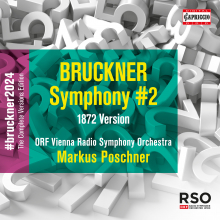
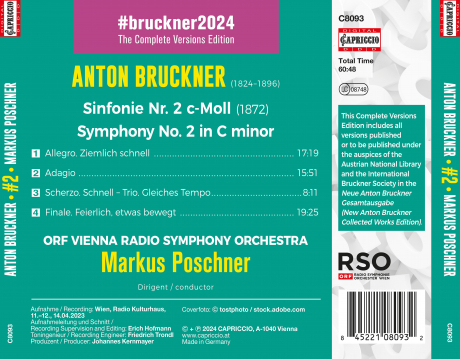
#bruckner24 Symphony #2 (1872)
ORF VIENNA RADIO SYMPHONY ORCHESTRA · Markus Poschner
Bruckner’s Second Symphony is a rare enough encounter in its 1877 version, but it’s virtually unperformed in the 1872 original version. This is not owing to some deficiency of the earlier ideas compared to the later alterations. It’s mainly habit and convenience because to get new parts and re-learn something ostensibly known, that differs in a great many details, means an extra expense of effort and resources. That’s a shame, really, because it is decidedly worth discovering the original, not-yet-ironed-out rawness of Bruckner’s early masterpiece, which was something unheard of at the time – but needn’t remain unheard now.
Youtube
Weitere Bilder
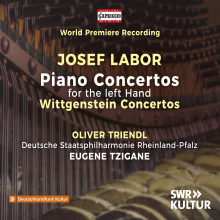
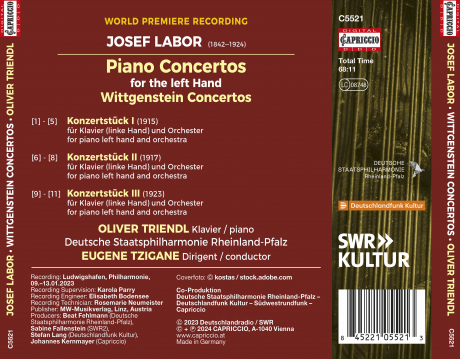
JOSEF LABOR
OLIVER TRIENDL · Deutsche Staatsphilharmonie Rheinland-Pfalz · Eugene Tzigane
Besides the well-known Left Hand Piano Concertos by Korngold, Prokofiev, Ravel and others, this very first Concert of Josef Labor marks the beginning of this genre in 1915. One-Handed pianist Paul Wittgenstein ordered it already during his captivity in Russia where he lost his right arm but determined to forward his pianistic career. Labor was part of Johannes Brahms’s close circle of friends. At the age of three, he lost his sight due to smallpox. For him composition was a luxury, insofar as he had to rely on the help of a scribe who had to commit the work to paper. Labor’s music is very skillfully composed, always sensuous, and first and foremost melodious; it does not require a too complete concentration on itself. These World Premiere Recordings marks an highlight of Capriccio's Labor-Edition which focused already since years on this sensitive Music of an mostly forgotten composer.